Five chapters
A journal, and patient leaflets from day one
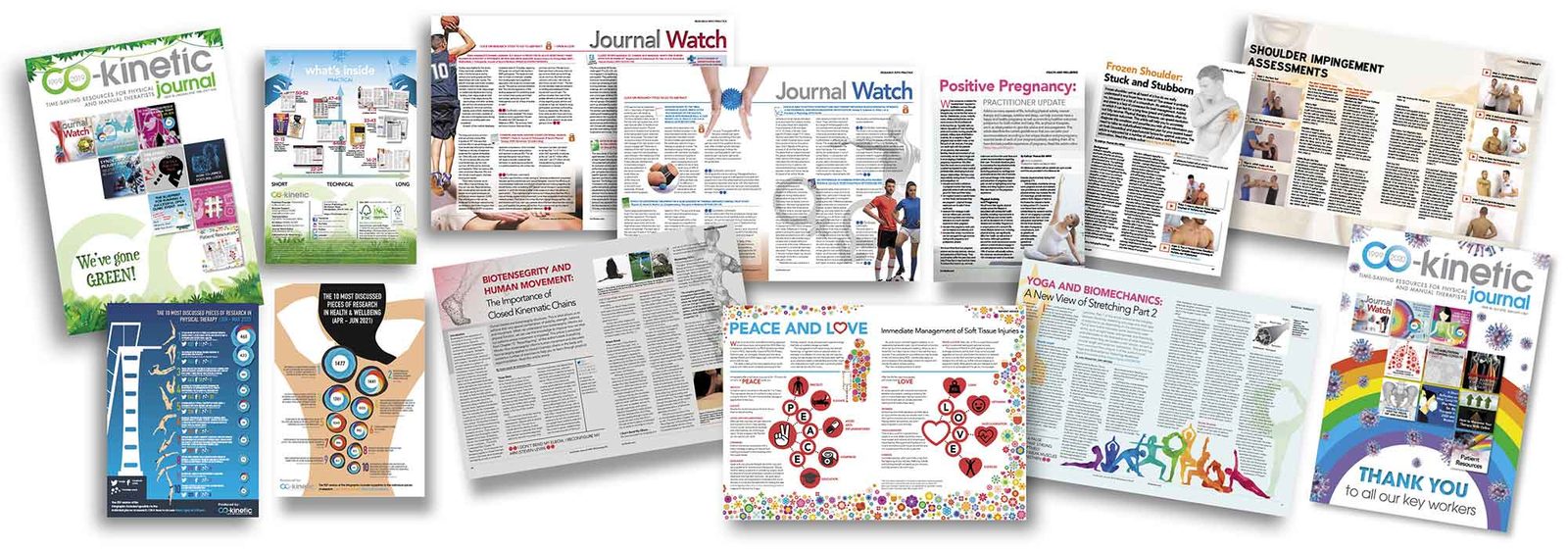
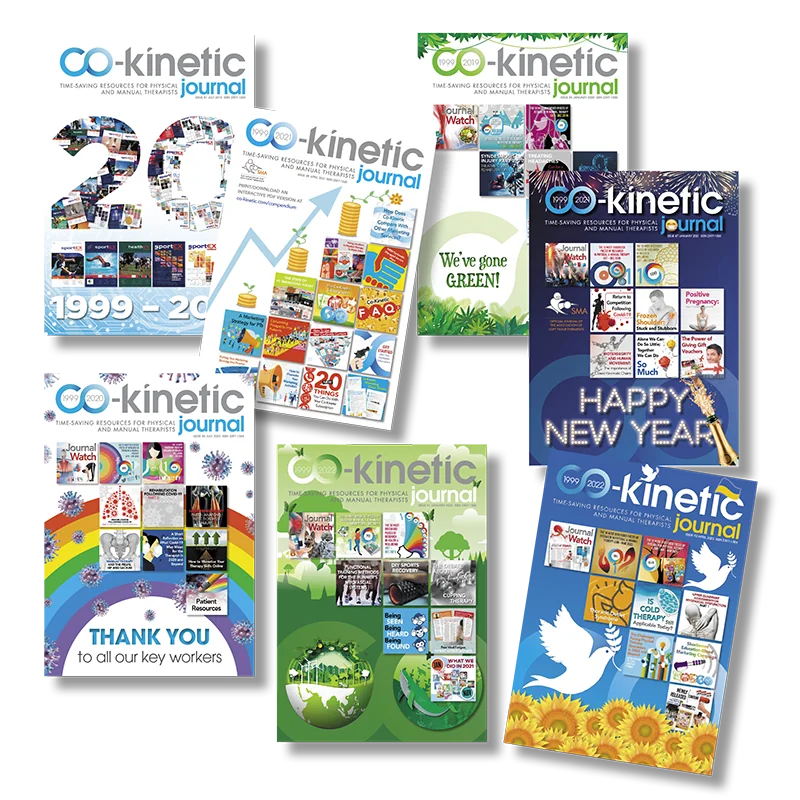
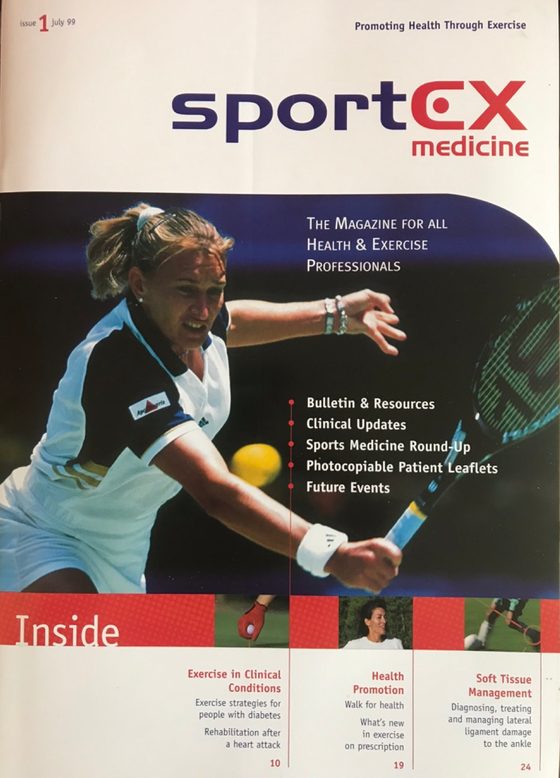
In 1998 Tor Davies, a former physiotherapist with a sport and exercise science degree and two years as a medical journalist, gave up her job to start a journal. She sold her parents ten shares for £10,000, a hard-fought investment that paid for the logo, the design of the first issue and the first print run, and in July 1999 Sportex Medicine went out. It was a translational journal: clinical research turned into something a busy clinician could use, with patient resources from the first issue, because a clinician's job does not end when the patient leaves the room. From there on she was flying by the seat of her pants: stuffing renewal letters at eleven at night every quarter, in the days before email, for a stupidly low £26 a year for four issues of a full-colour journal. The parents were paid back, with interest, five years later.
Several million leaflets, and the people who gave us the breaks
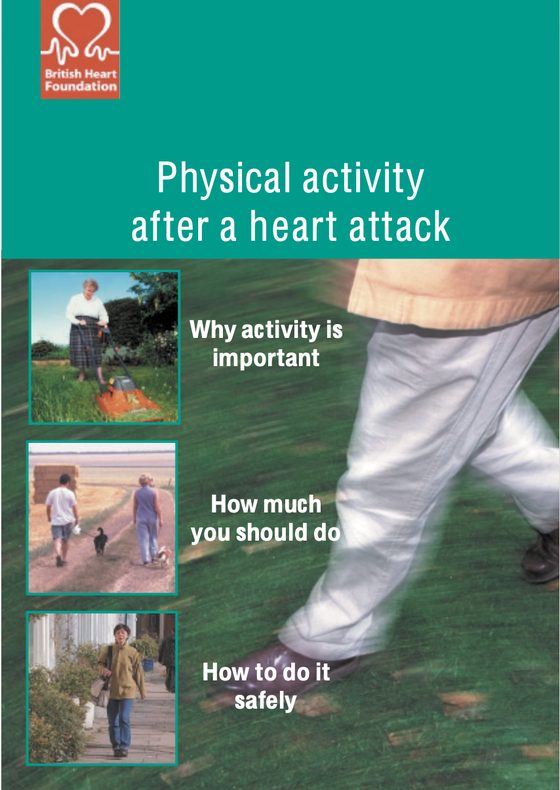
A series of patient leaflets on physical activity for health, a subject almost nobody was covering, caught the eye of the British Heart Foundation, which commissioned several million BHF-branded copies. Diabetes UK, Asthma UK, Walk 4 Health and Physio First followed. Those nods, Tor says, "gave me the much-needed confidence that I was on the right track".
But a business survives on the people who give it a break. Kim Harvey at Physio First, the man with the radio voice, rang out of the blue and, with Sally Roberts, put the journal in front of 3,500 private physiotherapists every quarter, an audience we could never have reached alone. That deal kept us alive. Joan Watt, founder of the Sports Massage Association, rang late one night to say the SMA was about to fold and ask if there was anything we could do; we took on its management for a fixed fee per member and got it back on its feet. Kris Tynan and Tim Webster of the Body Life Conference gave us spare room at Leisure Industry Week, and with six weeks' notice we ran the first SMA conference day, where Joanne Elphinston had a room full of therapists rolling about on the floor. At the peak we were running close to 200 courses a year, for everyone from MSK professionals to the remedial instructors at Headley Court, the Defence Medical Rehabilitation Centre, and building e-learning for the YMCA. It is about the people.
From publishing to marketing, without the salesy aftertaste
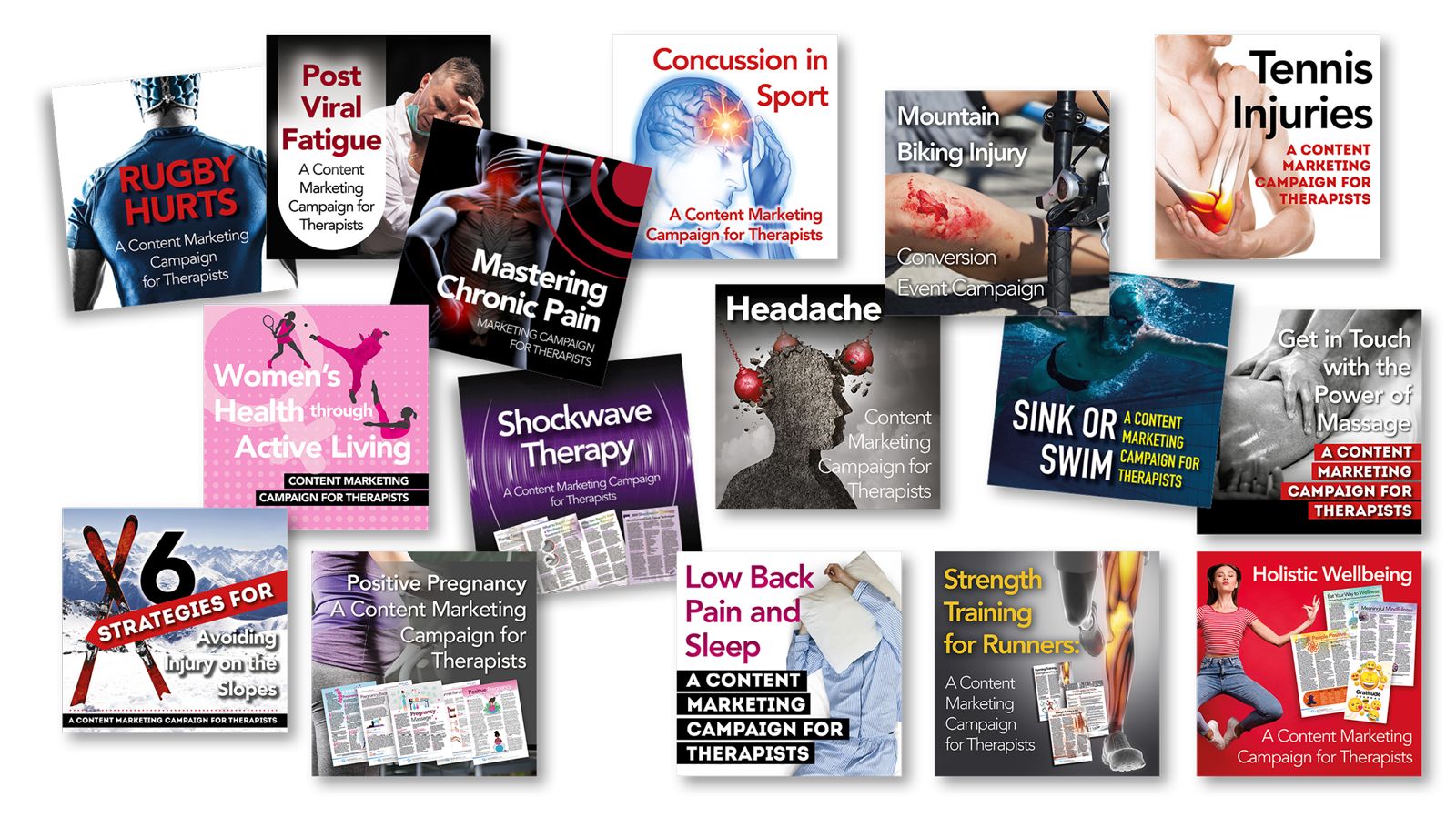
By 2015 the brand had become Co-Kinetic, and by 2017 the internet was awash with free clinical content. It was time to take stock, so Tor asked more than 1,500 therapists worldwide one question: "What is the one thing about your business that keeps you awake at night?" The answer was not knowing how to generate a reliable, controllable flow of new patients without falling back on offers and discounts. So we built on what we had always done. Each clinical topic became a complete educational campaign: an evidence-based article for the clinician, and for their patients the blog posts, emails, leaflets, social posts and printable posters to go with it, with a platform to send it all. Around 51 campaigns followed. The Marketing Grader, the 80:20 webinars, the Built on Trust course and the beginnings of a marketing manual of the same name taught thousands of clinicians how to market by educating, delivering value and building trust.
Content that has to prove it worked
The campaigns had a limit: they were the same for every clinic. When AI arrived, Tor built herself a pipeline for researching and writing campaigns, then, in October 2025, started building it as a product clinics could use for any topic. She never launched it. There was no point in a clinic generating more content unless it could be shown to move the needle. So she built the website assessment instead: a system that reads a clinic's website the way an AI reads it, asks the AI tools what they say about the clinic, works out what the clinicians should be known for, writes it under their names and measures what changed. Marketing is notoriously hard to prove; a former physio and sports scientist was not going to ask anyone to take it on faith. Twelve months later, almost to the day, it works end to end: the Clinical Content System. Many clinics already pay someone to produce SEO content for their website. This replaces that, with content that is researched, written under your clinicians' names, and measured against what the AI tools actually answer.
Every area of marketing, connected, with the clinician at the centre
Each product Co-Kinetic sells today is one piece of a single marketing partner for private practice: one that knows a clinic's patients, keeps its website current and findable, tells the right people the right things at the right moment, and acts within limits the clinic sets. Behind that is an older idea from the 100th issue of the journal: that MSK clinicians, with their holistic training and their place in the community, are uniquely placed to be the trusted centre of local health. A community needs its good clinicians to be the ones patients are sent to. That is why it matters which clinics the AI names.
See how it all fits together: the four stages, in order, and what we do at each one →